Ficus natalensis is one of my favorite species for bonsai. It has many characteristics making it suitable for bonsai. One, of these is how easily it is grown from root cuttings.
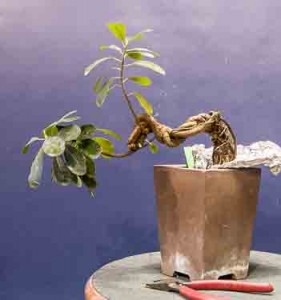
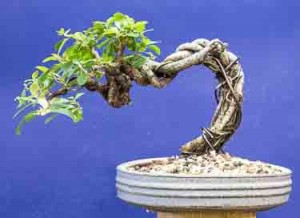
The images show one of mine that is only 2 years from a root cutting.
Ficus natalensis is one of my favorite species for bonsai. It has many characteristics making it suitable for bonsai. One, of these is how easily it is grown from root cuttings.
The images show one of mine that is only 2 years from a root cutting.
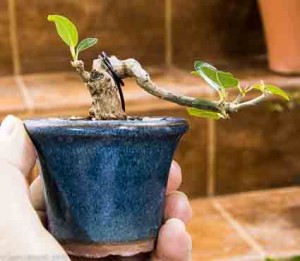
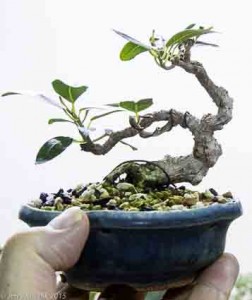
Bonsai can come in all sizes from tiny to huge. There is a fascination with really small ones that can fit into a hand.
Here are two of my small fig trees. Neither are completed bonsai but just for fun. The species is possibly Ficus burkei.
The scientific name for this plant is unknown. I am calling it Ficus ‘Mexicana’ since the plant originated in Mexico.
Mexican has many similarities to the Willow Leaf fig, Ficus salicaria, but it has much larger leaves. The plant responds very well to bonsai culture and should be a welcome addition to the bonsai world.
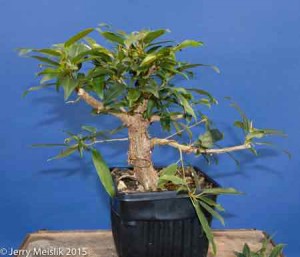
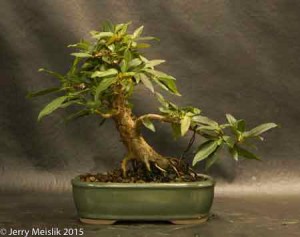
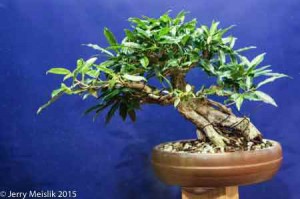
This tree is a Ficus microcarpa that has been growing wildly for some months to gather strength and to build up the right lowest branch. Now it is time to get it trimmed back and looking pretty.
Bonsai need periodic wild growth to gather energy and to re-balance parts of the tree that might need more development but then comes the time to bring them back to shape.
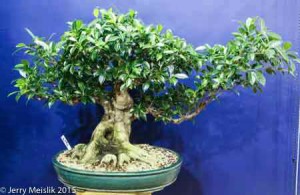
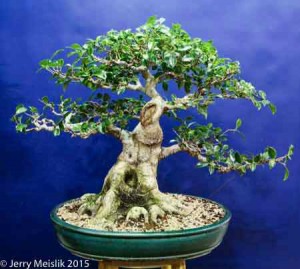
Ficus ‘Exotica’ is a fig found in the bonsai trade but its real scientific name is unknown. It has many characteristics in common with Willow Leaf fig, Ficus salicaria. Exotica has a more robust growth with wider leaves but it is a strong grower and can shape very pretty bonsai in not too many years of training.
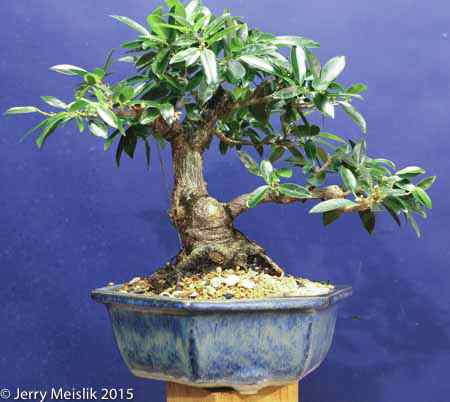
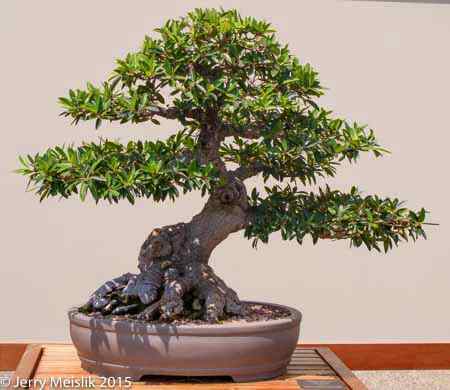

My friend Tim Hoehn-Boydston has an extensive collection of Ficus trees. One that he has in his collection is Ficus benghalensis. He has two forms, one with normal large leaves and the other with much smaller leaves.
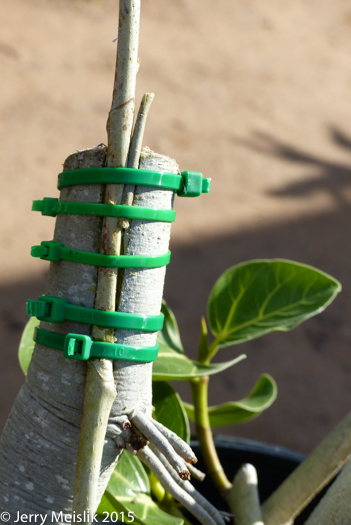
Tim decided to graft the smaller leaf form into the large trunk of the larger leaf variety. This would put smaller leaves onto a larger trunk specimen; always a desirable featue in a bonsai.
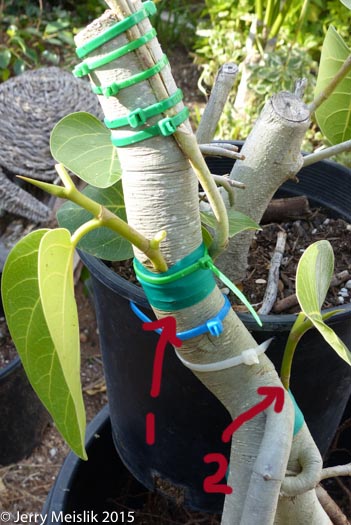
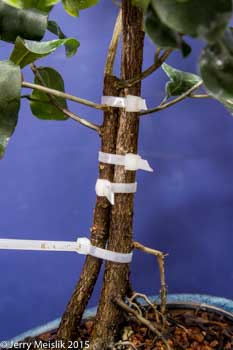
Three grafts were placed. The top one was an approach graft bringing a long branch of the small leaf tree and placing it into a groove in the top of the large trunk, large leaf tree. Two other grafts were placed lower on the tree and these were free grafts not attached to the parent tree.
Baggies were closed around the free grafts as a humidity measure to keep these small grafts from drying out while the grafts took. Baggies are removed in several weeks when the grafts are showing signs of taking.
The top approach graft is kept in place until the graft shows signs of growing strongly and then is severed away from the mother tree.
Grafting is one way to introduce better foliage on a tree.
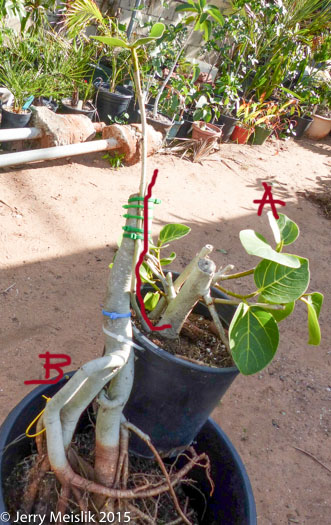
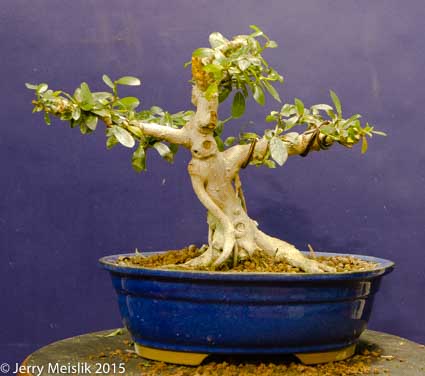
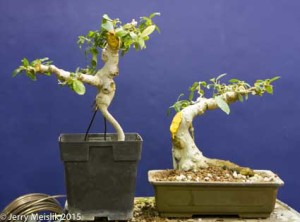
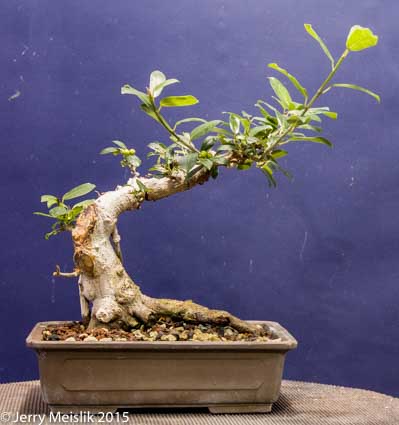
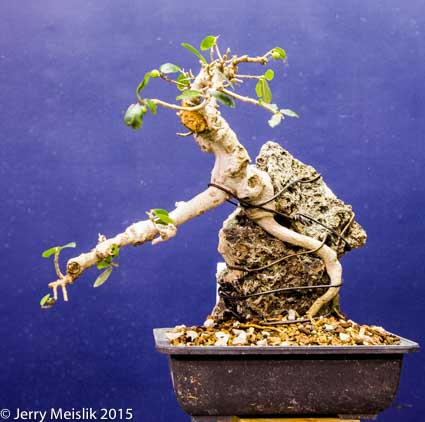
Ficus burtt-davyi can be a difficult bonsai subject. Sometimes it just won’t grow properly. This tree has been a problem for me over many years.
It has just not been vigorous and I have had to consider discarding it or perhaps re-styling it. My decision was to get radical and to cut the tree in half. One part will become a slant or windswept while the top portion with only one root was secured on a rock to justify its poor root system. Time will tell if I can bring these two to a satisfactory bonsai design.
The overall vigor of the tree may respond to less water, coarser soil and allowing it to rest during the shorter days of winter. Time will tell.
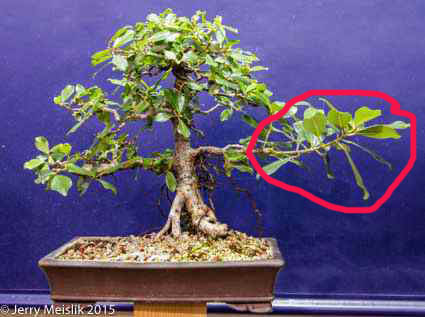
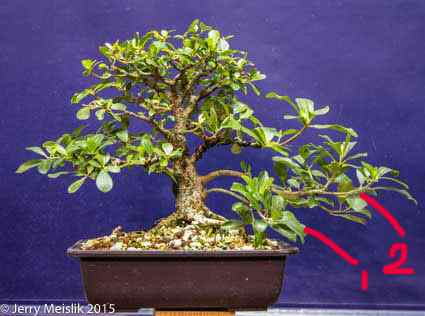
If a bonsai needs to have a heavier branch than it must be allowed to grow faster than the other branches.
Thickening will occur in direct proportion to the number of leaves photosynthesizing on the branch. Keep more leaves to produce more energy and more growth to thicken the branch. After the branch has enough thickness it will need to be shortened back to proper length for the design and then twigging density can be accomplished.
Branches also can be kept on the trunk to accomplish trunk thickening and later removed. Thickening only occurs on the trunk below the branch and not above it.
Developing a bonsai requires many steps. One critical step is allowing the bonsai in development to grow wildly. This allows the tree to gain strength and to form branches that will be used in its development.
Periodically the overgrown tree will be trimmed back, given a haircut to bring the design back to a more compact design while also keeping the needed branches and eliminating the ones that are not necessary. This process is repeated until the later stages of a bonsai’s maturity.
Once mature and the design is set growth is kept more restrained. The cycle of growth followed by trimming back is kept up for many years until the tree hits maturity when a more restrained growth and tim back cycle begins.
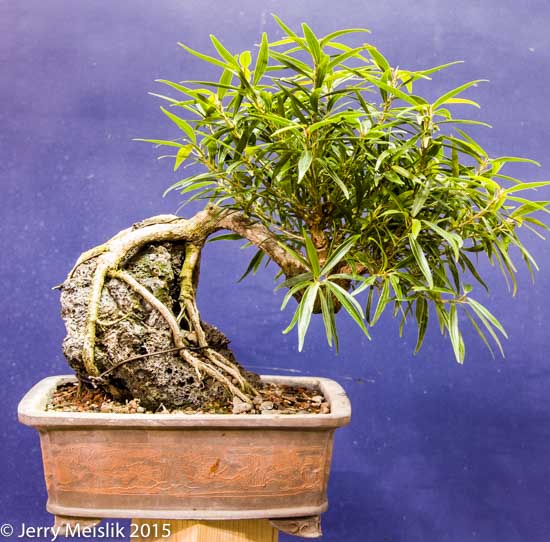
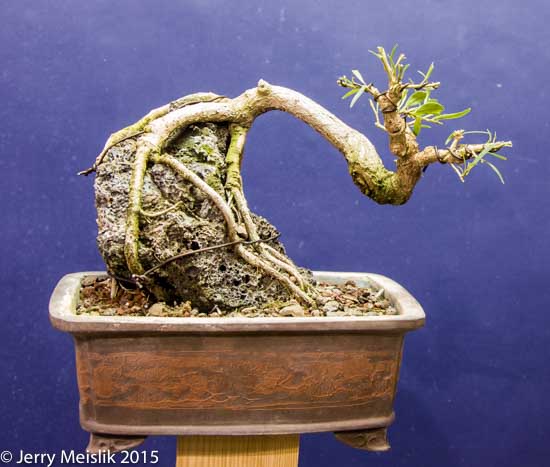
In creating a bonsai from rought stock there are some typical steps in the process.
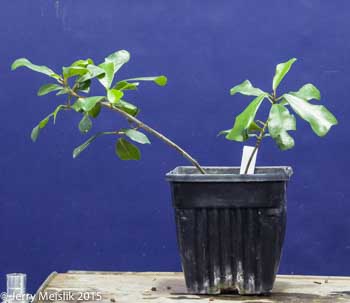
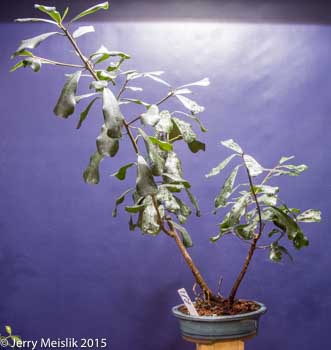
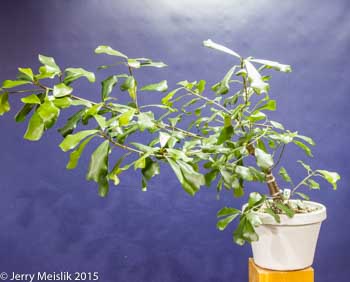
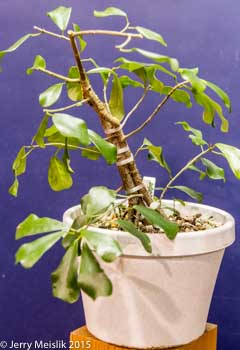
Low branches have been kep to help thicken the lower trunk.
Once again the tree will be allowed to grow wildly until it is time to select branches to keep and branches to remove and some preliminary wiring to shape.