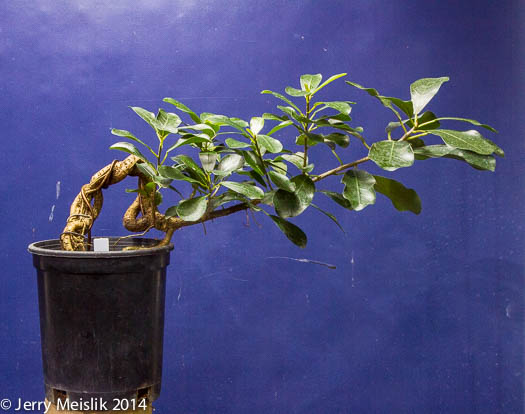
Sometimes splitting a fig into several parts is the way to go with initial styling to maximize the material’s potential.
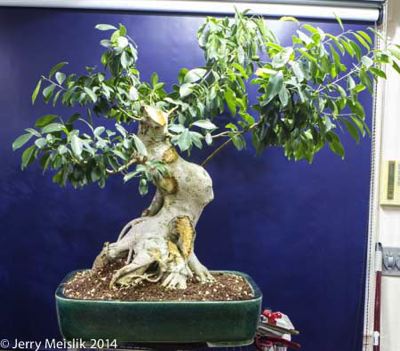
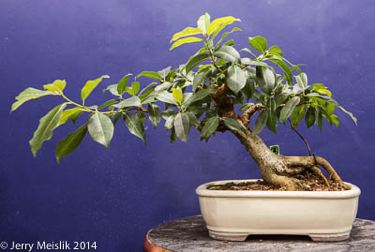
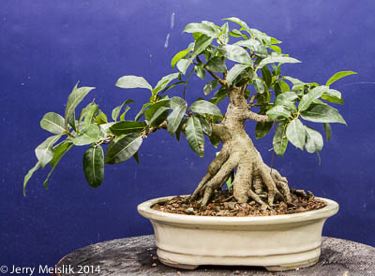
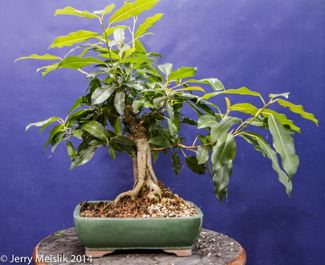
The pant is a Ficus natalensis grown from a root cutting and perhaps two years old. The only exciting thing about it is the twisting lower trunk which should make a nice tree using that as the focal point for the future bonsai.
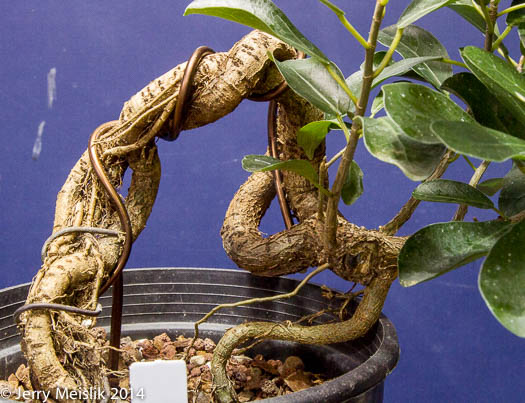
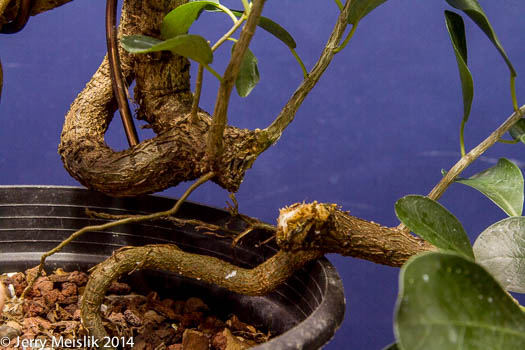
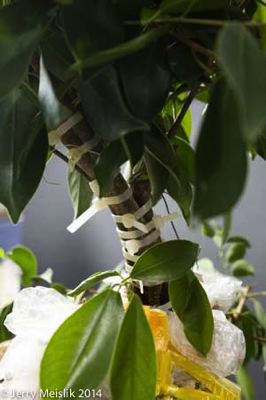
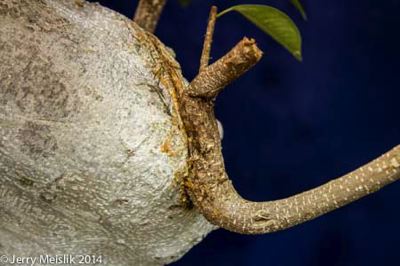
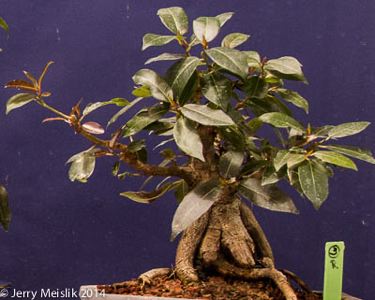
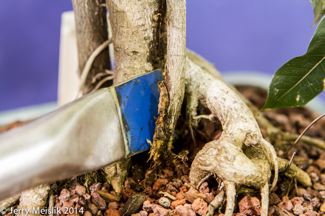
An appropriate spot was chosen to split the tree into two sections. This point was selected since it would leave the top section with a good aerial root to keep it alive. This section will live happily on this one root until it is time to give it a styling.
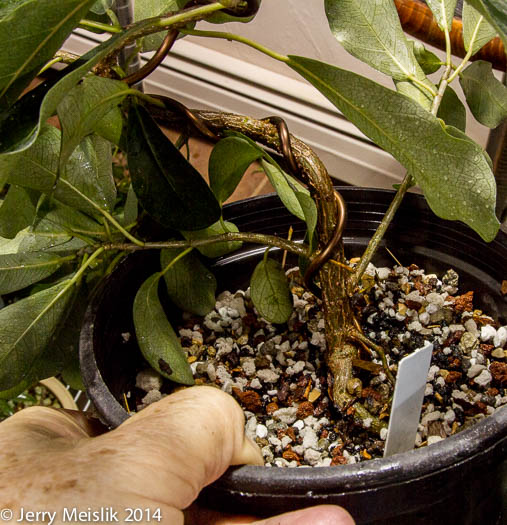
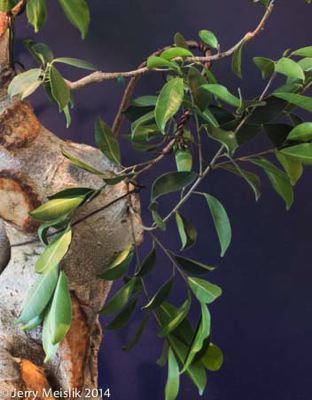
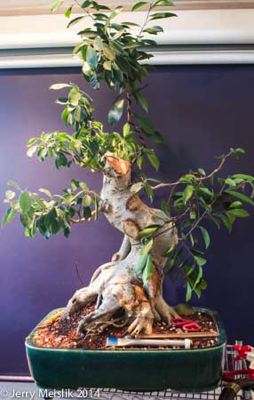
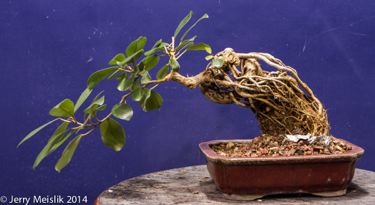
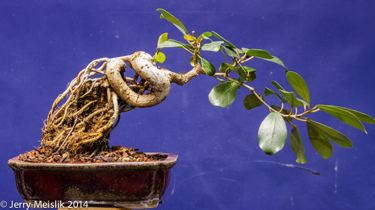
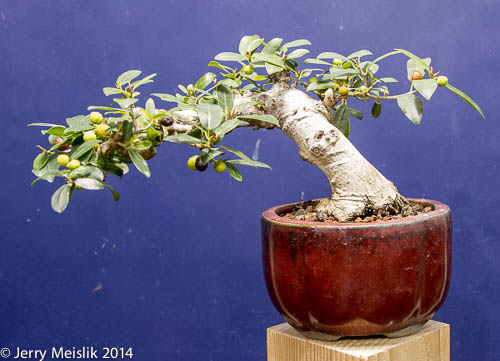
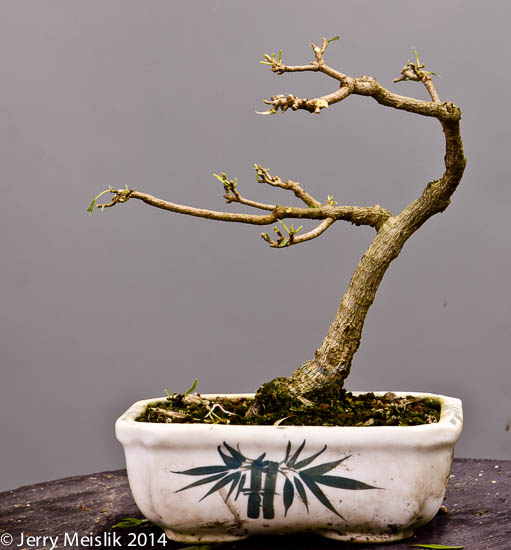
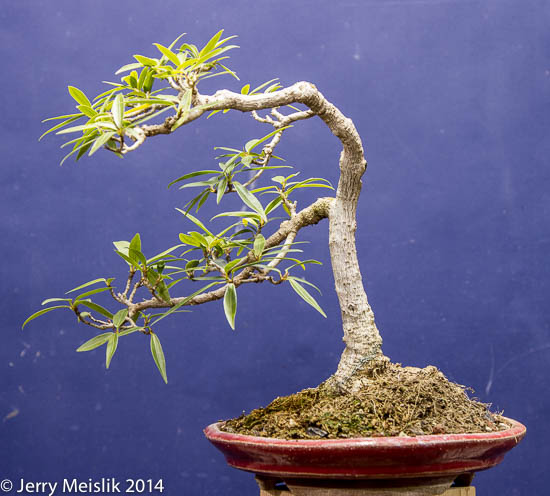
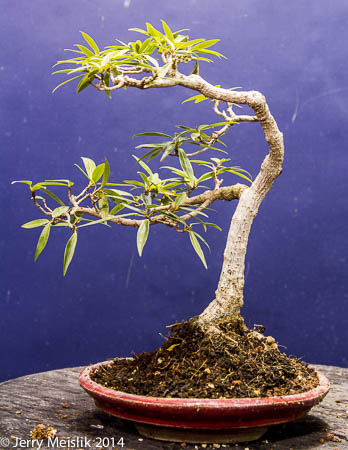
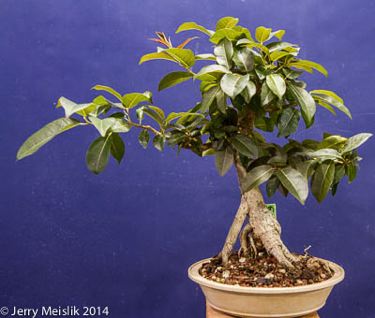
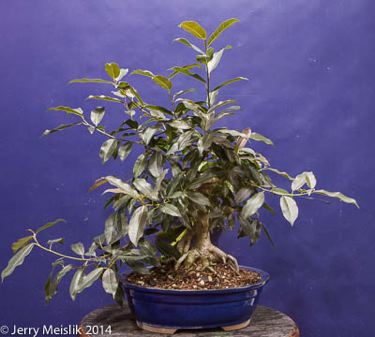
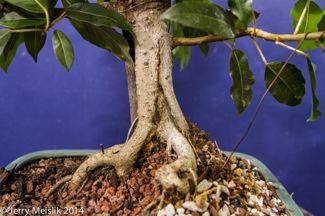
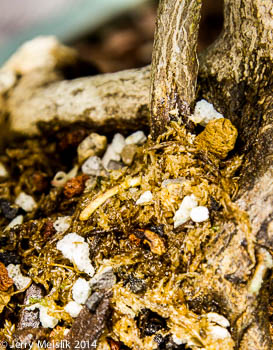
The startClose up of the top section of the plantThe two sections are now split apart leaving the top part with a good root to carry itThe top section planted using its one rootThe bottom section potted and several branches remain to form the future of this bonsai
The final design is not done but this is just the initial blocking out of the future bonsai. Consider breaking up a tree when the parts are more exciting than the original tree left intact.
The definitive reference work on Ficus
for bonsai. The book is a softcover, 8 by 10 inch volume, with 144 color pages, containing detailed information for the beginner as well as the advanced hobbyist.
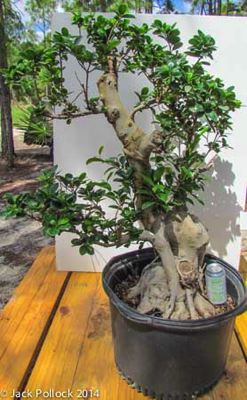
This Ficus microcarpa, Chinese Banyan, was a gift from bonsai friend, bonsai grower and dealer Bonsai Jack of Florida – http://www.bonsaijack.com
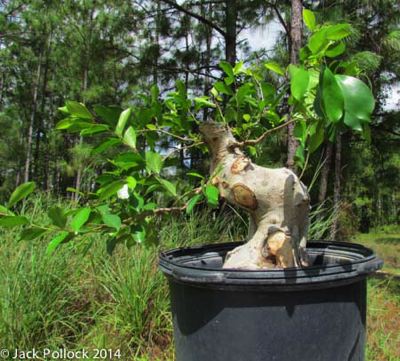
Jack sent me this tree after initially styling it in 2010. In the first few shots you can see how the top of the tree was totally removed and all the China grafted branches were removed leaving the wild form of Ficus microcarpa to sprout back and provide the new branches for the future structure of the tree.
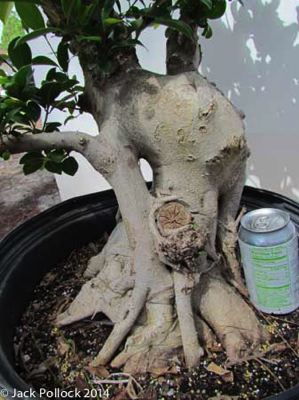
The imported tree showing the small leaf cultivar grafted-in foliageTrunk detail, with a very large and bulky aerial on the leftJack removed all the grafts and the native larger leaf foliage has re-sproutedThe tree in my plant room showing robust growth of foliageAn approach graft was done on the right to create the first low right side branchOverview showing the right sided graft and the apex undergoing fusion grafts to thicken it upThe first set of fusions to bulk up the apex
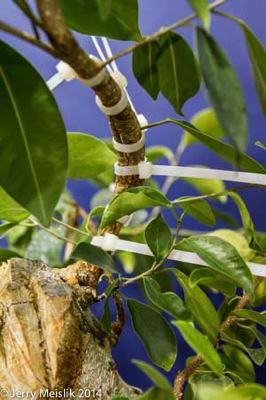
The apex was so thin and not believable that I brought up two or three additional branches from the trunk and used electrical ties to force fusion and thickening of the apex. This worked very well and by October of 2014 I felt that even more thickening would be needed
The apex fusions did very well and were completely fused but the apex was still too thin to be believable as a good transition of the topped trunk so about 6 rooted cuttings previously taken of this same tree were attached with electrical ties to the apex and their roots inserted into a plastic baggie of soil also attached to the top of the trunk.
Close up view of the second set of fusions to bulk up the apex, 2015The baggie contains soil to allow the roots of the rooted cuttings to survive and fuse with the apex
In the process of doing this second fusion set to the apex my assistant accidentally bumped the previously grafted right main branch and it was broken off.
Close up of the right sided graft on its own
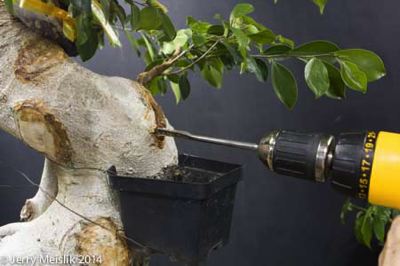
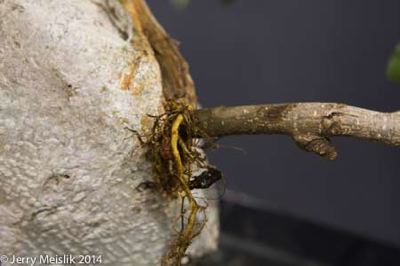
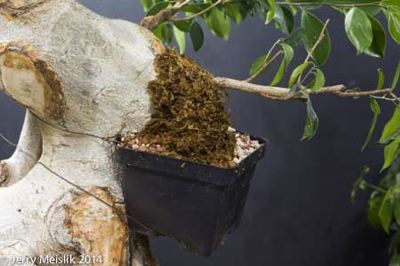
To replace this another previously rooted cutting was inserted into a hole drilled into the trunk. The root was draped out of the drill hole and into its own pot of soil and covered with sphagnum moss.
Hole being drilled to accept rooted cutting to become right lowest branchClose up of the rooted cutting in placeRoots mossed and led into a container of soil
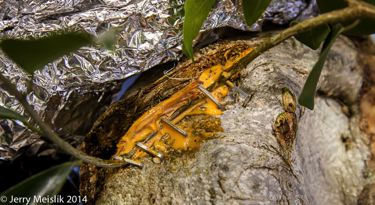
The new right sided branch graft soon failed and I made a third attemp to get a right sided branch by doing an approach graft from the thin back branch brought forward and inserted into a fresh groove in the trunk. The graft was secured with staples as you can see below.
This is the 3rd attempt to get a right sided branch – approach graft from the back
Time will tell how this all will turn out. So far I am quite happy with about 2.5 years of work and progress on this huge fig. Bonsai is a never ending process of refinement and change necessitated by how the plant grows.
This is a young Ficus natalensis. Ficus natalensis is one of the best figs for bonsai as it is vigorous, develops aerial roots, tolerates growing in containers as well as growing well in relatively poor light.
Which of the two sides do you prefer?
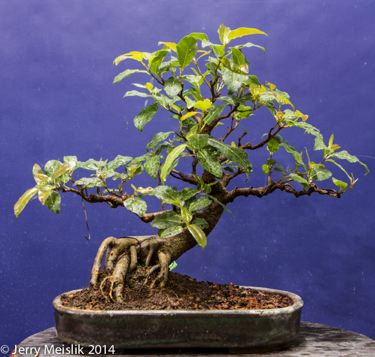
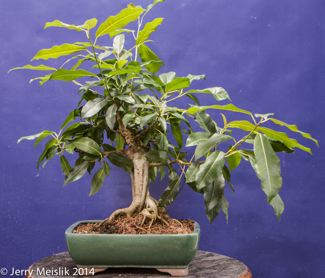
This is side one, showing a profusion of exposed rootsThis is side two showing a major prominent root/trunk movement
Ficus burtt-davyi is one of the figs that is not too infrequently used for bonsai.
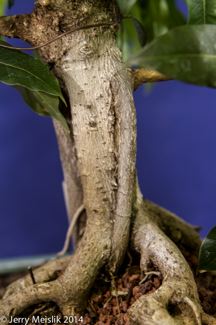
There are many cultivars of this fig differentiated by small, medium or large leaves. Even the large leaf form has leaves that are only two or three inches in length.
One of the great attributes of this fig is that it will form figs nearly every year about the time that the new foliage is getting ready to sprout. Figs/syconia are small in size, start as green in color and mature to red or dark purple. Of course the seed inside is not fertile as the specific pollenating wasp is not present in my plant room.
A few years back I styled a Willow Leaf cutting into a windswept style. I enjoyed the plant although it was a young and immature plant.
The young cutting shaped out as a windswept style
The tree was re-potted some time ago and looking at the image of the plant revealed the tree was no longer attractive. What was the problem?
The tree in its new pot just isn’t exciting and feels wrong
Often when re-potting a tree I get the angle of the trunk wrong. I get busy selecting a pot, arranging the roots and securing the tree into the pot in the process the tree winds up being potted at the wrong angle or wrong position in the pot or tipped forward or backward and out of position.
Tipped back to the right – the design feels better
Once potted at a better angle I now like the final result much better.
One of my favorite of the larger leaf figs is Ficus virens, commonly called the White or Spotted fig. Although the species has larger leaves that make creating small sized bonsai difficult, it can be done.
Ficus virens is quite suitable for larger bonsai. It has attractive leaves that in some cultivars can be quite red or bronze on the new foliage. Thailand growers have developed some that are very red. The red color in the leaves will persist for a week or two before turning to a deep, deep green color.
In the photos above you can see that the mature leaf color varies from seedling to seedling. Some show a fair amount of red or bronze-tinged foliage. These plants are all about 7-8 years old from seed.
Aerial roots are one of the very useful and impressive features of some fig trees. As with other design elements of a bonsai the aerials must augment the overall design scheme.
In this Ficus virens the aerial root crosses across the trunk and in addition it gives the appearance of a reverse taper to the trunk of this tree. It could be removed or a better option is to move it to the other side of the trunk and use it to improve the taper of the trunk.
The aerial crosses the trunkCloser view of the crossing aerialA chisel is used to separate the root from its adherence to the trunkThe aerial is repositioned to the right side of the trunkClose view showing moss added to the base of the aerial to help promote new hair roots to formYoung root emerging after only two weeks
The moved aerial is wrapped with sphagnum moss and placed into the soil. Within two weeks a new hair root is already formed. The repositioned aerial is now a permanent fixture of the design.
The definitive reference work on Ficus
for bonsai. The book is a softcover, 8 by 10 inch volume, with 144 color pages, containing detailed information for the beginner as well as the advanced hobbyist.
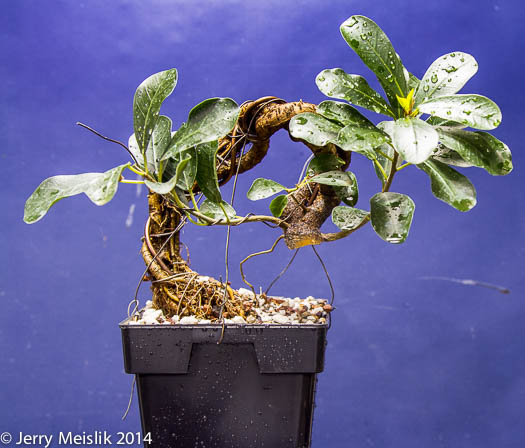
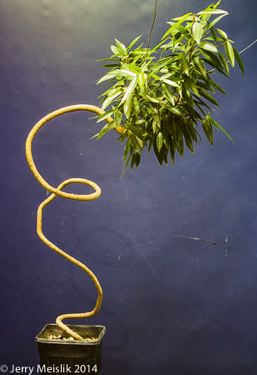
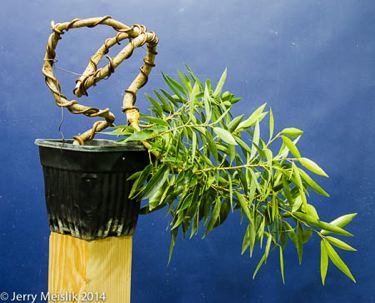
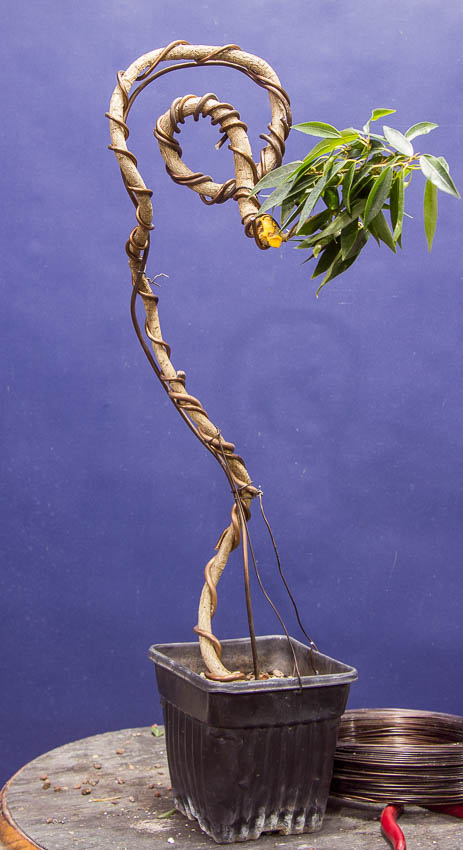
This is an exercise in bonsai creation that is just for fun. The plant is a Ficus salicaria, Willow Leaf fig, grown from a root cutting. This was a very long root, perhaps 2 feet in length. Foliage has sprouted at the cut end but how to design a tree out of it?
One possibility is to place a lot of wire on it and to twist and turn and bend until the trunk is quite contorted. The result is as you see. The foliage canopy will need shaping but for now it is being left untouched to allow the trunk to grow and to hold the shape we have set into it with the wire. Literati or bunjin is the closest shape or style grouping in which this might fall.
I perhaps may change my mind and move the trunk into another shape.
Any thoughts?
The root cutting before it was shaped.After wiring and twisting a shape emerges
I hope to post information on growing figs and other tropicals as bonsai. Most of the information will be directed to growers who are keeping their plants indoors for most or all of the year. However, there will also be information useful to bonsai growers of tropicals and sub-tropicals growing out of doors.
The definitive reference work on Ficus
for bonsai. The book is a softcover, 8 by 10 inch volume, with 144 color pages, containing detailed information for the beginner as well as the advanced hobbyist.