This Ficus microcarpa, Chinese Banyan, was a gift from bonsai friend, bonsai grower and dealer Bonsai Jack of Florida – http://www.bonsaijack.com
Jack sent me this tree after initially styling it in 2010. In the first few shots you can see how the top of the tree was totally removed and all the China grafted branches were removed leaving the wild form of Ficus microcarpa to sprout back and provide the new branches for the future structure of the tree.
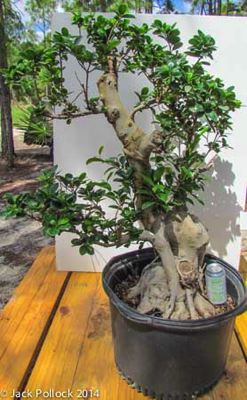
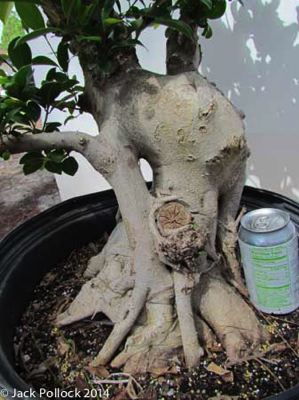
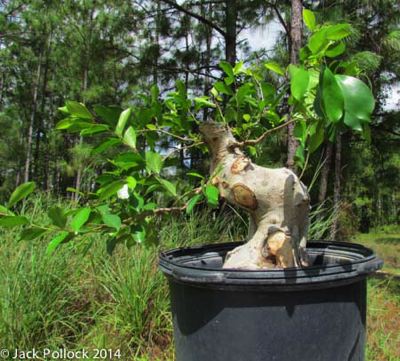
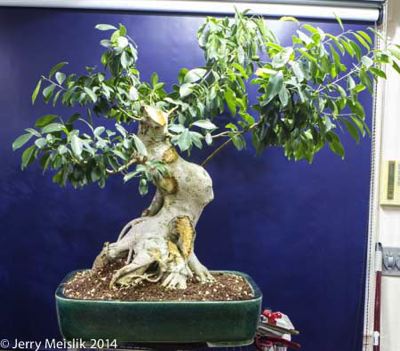
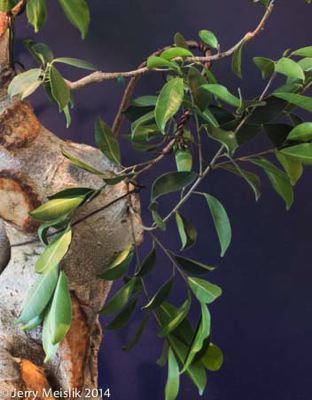

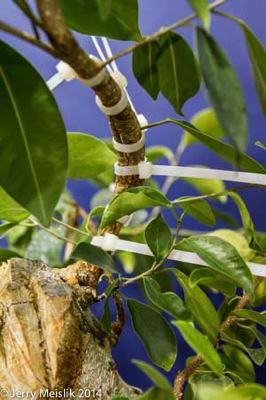
The apex was so thin and not believable that I brought up two or three additional branches from the trunk and used electrical ties to force fusion and thickening of the apex. This worked very well and by October of 2014 I felt that even more thickening would be needed
The apex fusions did very well and were completely fused but the apex was still too thin to be believable as a good transition of the topped trunk so about 6 rooted cuttings previously taken of this same tree were attached with electrical ties to the apex and their roots inserted into a plastic baggie of soil also attached to the top of the trunk.
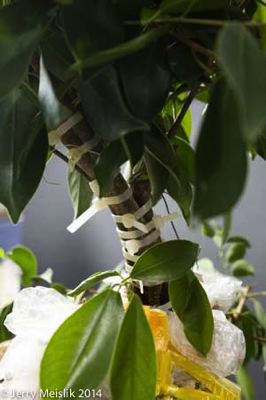
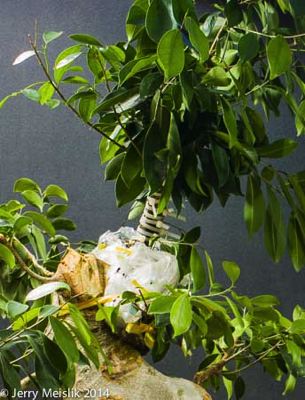
In the process of doing this second fusion set to the apex my assistant accidentally bumped the previously grafted right main branch and it was broken off.
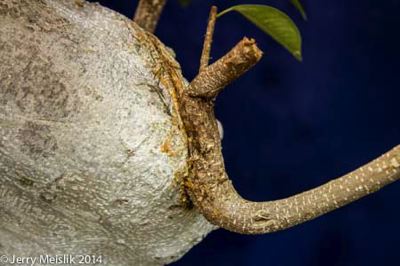
To replace this another previously rooted cutting was inserted into a hole drilled into the trunk. The root was draped out of the drill hole and into its own pot of soil and covered with sphagnum moss.
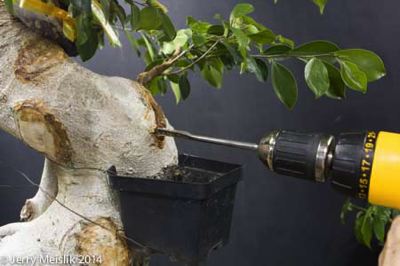
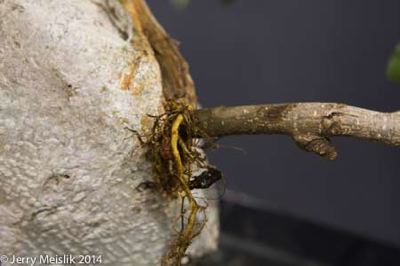
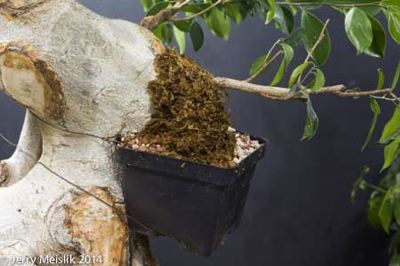
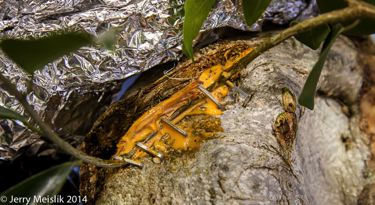
The new right sided branch graft soon failed and I made a third attemp to get a right sided branch by doing an approach graft from the thin back branch brought forward and inserted into a fresh groove in the trunk. The graft was secured with staples as you can see below.
Time will tell how this all will turn out. So far I am quite happy with about 2.5 years of work and progress on this huge fig. Bonsai is a never ending process of refinement and change necessitated by how the plant grows.