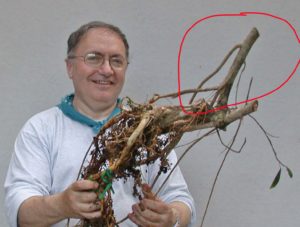
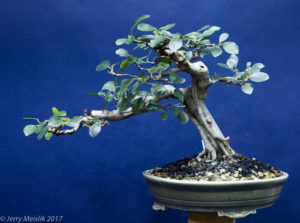
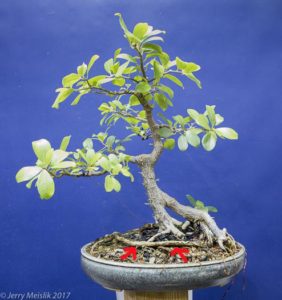
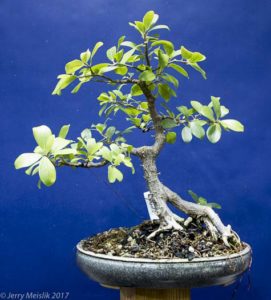
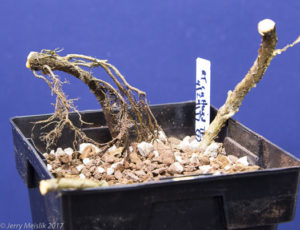
There are many ways to handle a tree with little or no apparent taper. In this case a Ficus ‘Mystery’ was grown from a very straight and taperless cutting.
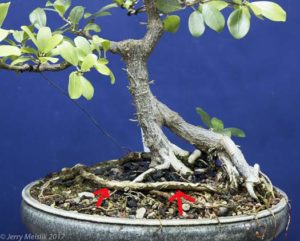
Fortunately there were several existing aerial roots that were brought down along the trunk and rooted into the ground. The aerial roots provide a visual thickening to the lower part of the trunk creating some taper that just does not exist. The roots coming off the aerials provide a nice surface flow that helps to visually stabilize the tree.
The area circled in red shows the straight cutting including a few aerial rootsThe bonsai shows some nice taper provided by the aerial roots as well as nice surface rootage.
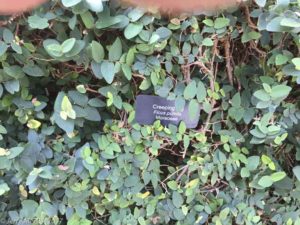
A fig commonly found in many garden centers used as a hanging basket plant is Ficus repens/pumila. Commonly called the Creeping fig. It is one of an assortment of figs that will climb up tree trunks, stone or brick walls and soon cover the surface with a very dense covering of leaves.
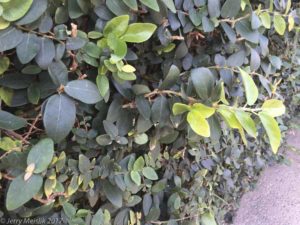
It is peculiar also in having two types of leaf. One is the very small heart shaped leaf that it grows as a small cutting and another much larger leaf that grows on sturdier branches that are often not supported on the wall to which most of the plant is clinging.
It an be used to shape small bonsai by allowing the green stems to get woody and to set shape and then to create a canopy from the branches. Getting a large trunk of this species is difficult and I have been looking for one for many years.
Creeping over a brick wall mostly small leaves are showing
Make sure to keep this plant moist as it does not recover from drying out.
Ficus show lots of natural variations when grown from seed. Leaf shape, leaf size, bark color, vigor etc. can vary greatly from one seedling to the next. This can even occur with seed harvested from the same mother tree.
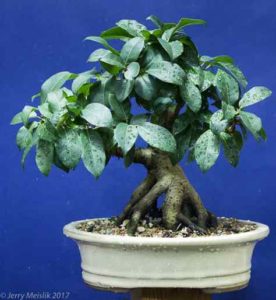
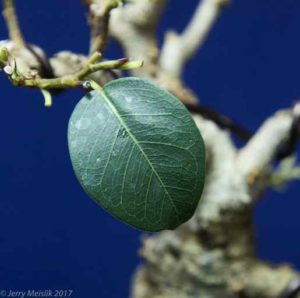
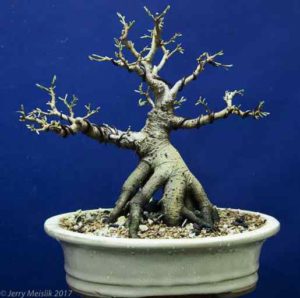
Ficus virens with a rounder leaf formSome of the leaves are quite roundThe same tree to show its branch structure after defoliation
Here is one of many Ficus virens that I have grown from seed. This individual has a rounder leaf than the normal virens. Its other characteristics are pretty typical for Ficus virens but if one were to just use the leaf shape as a major factor in the identification it might just lead you astray. This is one of the most frustrating features of Ficus, their variability. While making our lives miserable by confusing our identification it is a useful trait for the species as it enables them to modify themselves and perhaps find an environmental niche to exploit.
Sometimes it is desirable to have a heavier branch and the material is grown in a container, indoors or is just a slow growing variety. In this case the material is Ficus microcarpa ‘Melon Seed’. This is a slow growing, miniature leaf form of microcarpa.
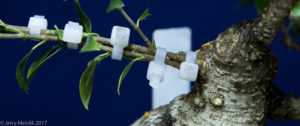
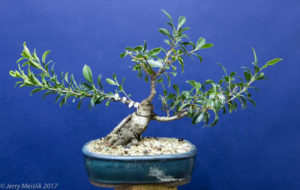
In order to develop it as a bonsai I have a good sized right branch but the left side needs a heavier branch. Fortunately, there are several small branches coming out of the left side that can be fused and form a proper sized branch. The apex of the tree is also too thin but there are no other branches that I can use right now to thicken it up.
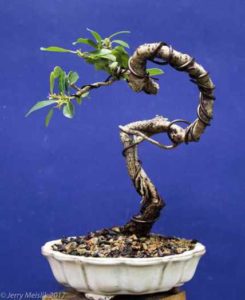
Ficus microcarpa ‘Melon Seed’ with a nice right branch but a very thin left branchThe left side has several small branches that are pulled together with electrical/cable ties and with time they will fuseAppearance of the branch now allowed to grow strongly for some months to fuse
Roots, as with any other part of the bonsai’s design, must be compatible with the overall look and feel of the tree.
In this case, there are one or more roots that do not work with the upright design of the tree.
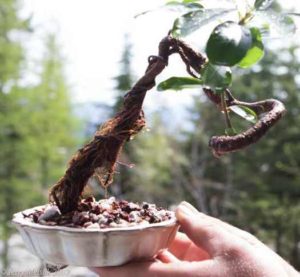
Non radial root detracts from the movement of the trunkClose up of the root The root is removed and the flow of the trunk is now enhancedIn this instance the roots are planted as this species will grow from roots
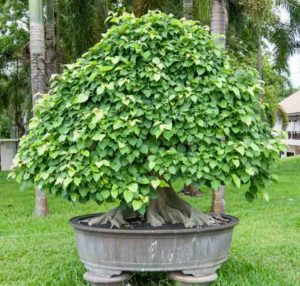
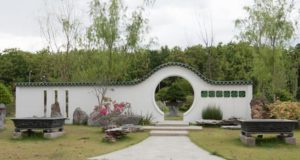
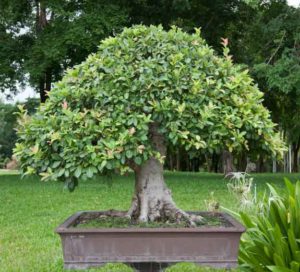
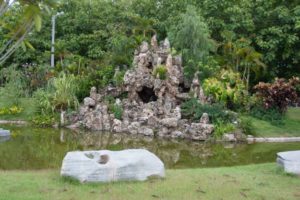
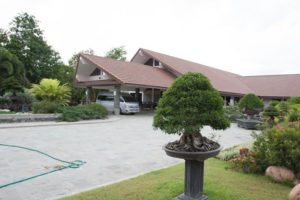
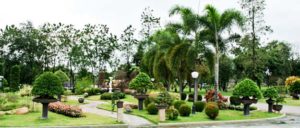
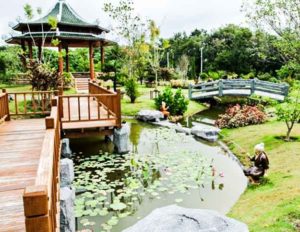
Ficus rumphii of very large sizeChinese garden is seen through decorative windowFicus virens, just one of the many species on displayPond with marvelous rock workMain entrance at the resort hotelJust a small part of the bonsai on displayLovely bridges and pagodas accent the water features
For all my bonsai and non-bonsai friends traveling to Thailand, I would like to highly recommend a visit to The Bonsai Village, Ratchaburi. The Bonsai Village is named after a , a local tree. The bonsai village is a spectacular resort featuring Japanese and Chinese gardens and containing thousands of bonsai trees. The resort covers some 40 acres along the Pa Chee river! In the gardens are beautifully displayed bonsai trees of museum quality; in fact it is one of the best tropical collections that I have seen anywhere. The bonsai were developed in Thailand as well as imported from many countries including China, Japan, Philippines, Taiwan, and Indonesia. And close to my heart are large numbers of Ficus trees including Benjamina, Microcarpa, Virens, Religiosa, Racemosa, and Rumphii – to name just a few. They are all displayed in wonderful matched containers.
It will take many hours to view even a portion of the bonsai and gardens but it will be well worth the time to see this international museum quality collection even if you have a few hours to spend. There are also exquisite accommodations with well-appointed guest rooms, dining facilities, and a Japanese villa in which one can stay. I highly recommend staying at the resort and enjoying the gardens and bonsai. To learn more about this world class garden click here. http://suanphungbonsaivillage.com/?lang=en
Root cuttings are one of the easiest ways to develop a good bonsai from throw away materials. Repotting a fig bonsai is needed every year to 5 years depending upon growth, species, size of pot etc.
On removing some of the larger and more shapely roots the root is potted up with the root hairs in the soil and the cut end sticking out of the soil about 1-2 inches. After 2-6 months the end of the root will sprout new leaves and stems. Over time the new growth can be shaped to be an interesting bonsai. In addition most of the root can be lifted out of the pot to make a longer trunk.
Not all fig species will sprout from roots but natalensis is one that sprouts very easily.
Ficus natalensis, root cutting that has sprouted new stems and leavesThe same root cutting after a year of growth and wiring for shape
Fig leaves are very variable from species to species. This is helpful in trying to identify a fig as belonging to a certain species. The problem is that the leaves on even a single plant can show great variation depending upon cultural conditions of light, moisture, growth in a container, wind, etc.
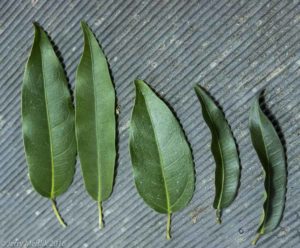
As an example the shot below shows several leaves removed from a single Ficus plant. The variability would make an attemp at a scientific identification very difficult. Many factors must be used to help in correctly identifying a fig. These include the leaf, bark, syconia, stipules etc.
Figs are wonderful plants to use for bonsai but they can infuriating to correctly identify without figs/syconia.
Ficus leaves removed from one plant showing the highly variable shape and character of the leaves
Over the years I have grown my bonsai plants in windowsills, under incandescent light, fluorescent lighst or metal halide high intensity lighting. The best results up to now are clearly growing under metal halide lights. The downsides of metal halides are relative inefficiency with lots of heat released as a by-product and thus higher electrical bills as a result. Some years back I did use and test a commercial LED light in the early day of LED lighting that proved to be toxic to my plants. https://suspicious-pike.51-195-201-14.plesk.page/bonsai-culture-and-care/tropical-indoor-bonsai/led-grow-lights-compared-to-fluorescent-lights-pt-1/
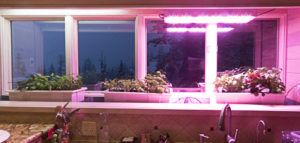
Recently I purchased an LED light from ActiveGrow LED lighting. This is a 300Watt unit with about 180 individual LED lights. It replaced a 4 tube 4 foot long fluorescent light that was growing herbs for our daily consumption. The herbs are growing in a window box in a hydroponic growing system. On the left side remains one of the two original 4 tube fluro lights but on the right side I replaced the fluorescent with the ActiveGrow LED light fixture. Over the last 3-4 weeks the comparison of the growth of the plants on the LED side is 2-3 better than the old fluorescent left side. The growth is thicker, leaves more colorful and leaf texture much firmer indicating ideal growing conditions.
Herbs growing in a hydroponic growing system, right side LED and left side fluorescent lighting
I have to reconsider the use of LED lights for my plant room where I grow my bonsai and have had them growing that way for over 17 years.
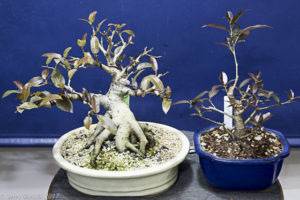
These are two seed grown Ficus virens, Lipstick fig. Each plant shows some variation in its leaves, bark, growth pattern etc. These characteristics can be influenced by the growth environment. In the case of these two plants the newly emerged leaves are red in color. This color changes to a deep green after a week or two.
Since the two trees are grown in identical soil, identical lighting and identical fertilization the variation in the red color is due to genetics. One consistently has darker red new leaves. I would love to find a clone that has red leaves that remain red! That would be a great addition to the bonsai community.
The virens on the left has bronze colored new leaves while the one on the right has deep, dark red new leaves. Genetics of each is determining this factor.