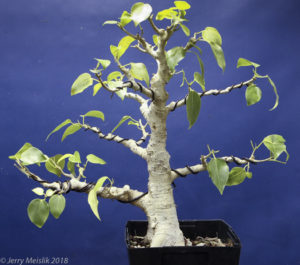
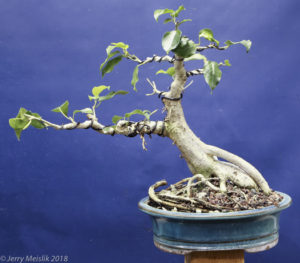
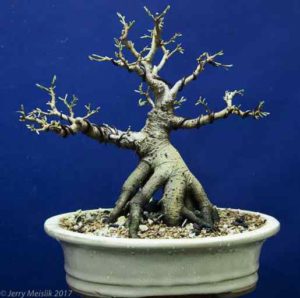
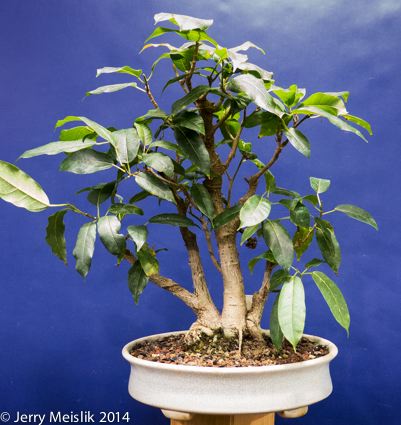
A very worthwhile fig to grow is Ficus rumphii. It is used extensively in southeast Asia for bonsai.
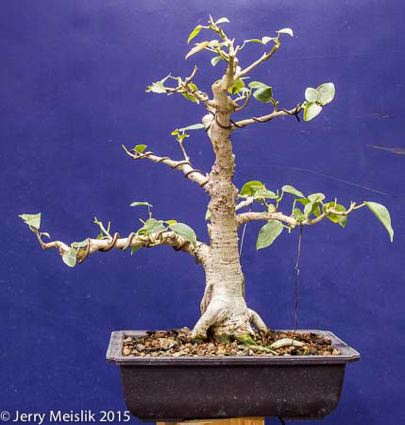
The pictures show two rumphii that I grew from seed and that are now 12 years old. The bark on this species is light in color as contrasted to religiosa which has a darker grey bark. Religiosa also has a longer drip tip on the leaves.
Upright style of rumphii, about 16″ tallSlant style rumphii,15″ wide, the curving roots on the left will be removed.
Ficus show lots of natural variations when grown from seed. Leaf shape, leaf size, bark color, vigor etc. can vary greatly from one seedling to the next. This can even occur with seed harvested from the same mother tree.
Ficus virens with a rounder leaf formSome of the leaves are quite roundThe same tree to show its branch structure after defoliation
Here is one of many Ficus virens that I have grown from seed. This individual has a rounder leaf than the normal virens. Its other characteristics are pretty typical for Ficus virens but if one were to just use the leaf shape as a major factor in the identification it might just lead you astray. This is one of the most frustrating features of Ficus, their variability. While making our lives miserable by confusing our identification it is a useful trait for the species as it enables them to modify themselves and perhaps find an environmental niche to exploit.
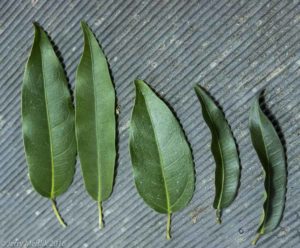
Fig leaves are very variable from species to species. This is helpful in trying to identify a fig as belonging to a certain species. The problem is that the leaves on even a single plant can show great variation depending upon cultural conditions of light, moisture, growth in a container, wind, etc.
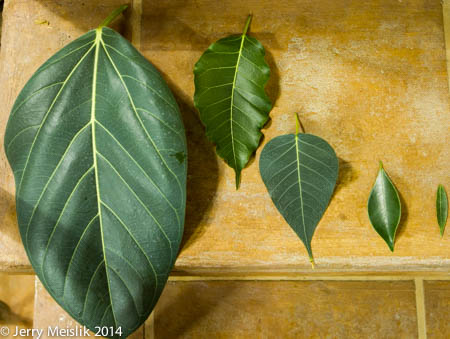
As an example the shot below shows several leaves removed from a single Ficus plant. The variability would make an attemp at a scientific identification very difficult. Many factors must be used to help in correctly identifying a fig. These include the leaf, bark, syconia, stipules etc.
Figs are wonderful plants to use for bonsai but they can infuriating to correctly identify without figs/syconia.
Ficus leaves removed from one plant showing the highly variable shape and character of the leaves
Utilizing large leaf plants for bonsai is difficult. There are various techniques to deal with plants that have large leaves, like Ficus benghalensis.
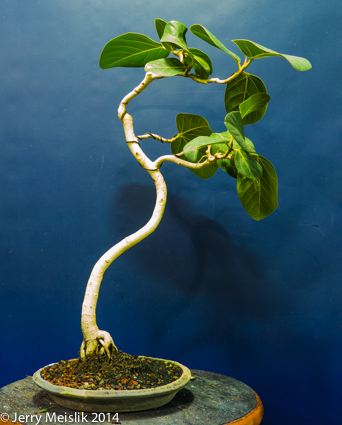
The first shot shows the tree with its various sized leaves. These are large but already reduced just by being grown in a small container.
Ficus benghalensis with leaves that are too large
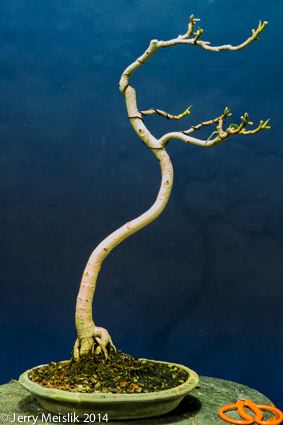
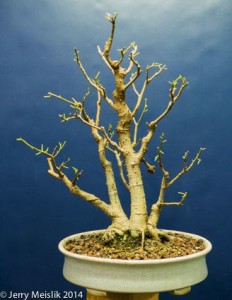
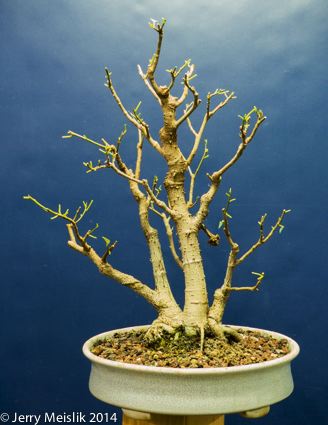
The second shot shows the tree in a defoliated state. In this leafless condition the branching and structure can be studied and analyzed. The bunjin/literati style is now appreciated once the distraction of the large leaves is removed, albeit temporarily. Once the new leaves grow out they will be smaller but eventually the newest leaves will grow out as full sized and ruin the illusion once again.
Defoliated the bunjin character and style of the tree can be analyzed and the scale of the design is now appropriate
The definitive reference work on Ficus
for bonsai. The book is a softcover, 8 by 10 inch volume, with 144 color pages, containing detailed information for the beginner as well as the advanced hobbyist.
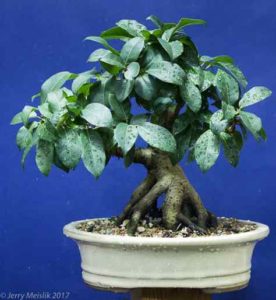
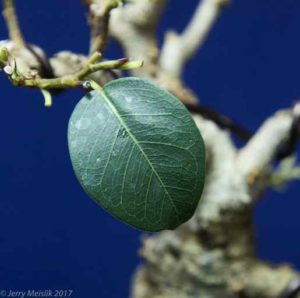
This is a Ficus rumphii, an unusual and rare bonsai subject in the west. This specimen is about 8 years old and seed grown.
Leaves are large but reduce with defoliation. There is some random branch die back suggesting that this may not make the best bonsai subject.
The bark is a rather stark whitish brown.
Ficus rumphii, about 12″ tall with most leaves removed
The definitive reference work on Ficus
for bonsai. The book is a softcover, 8 by 10 inch volume, with 144 color pages, containing detailed information for the beginner as well as the advanced hobbyist.
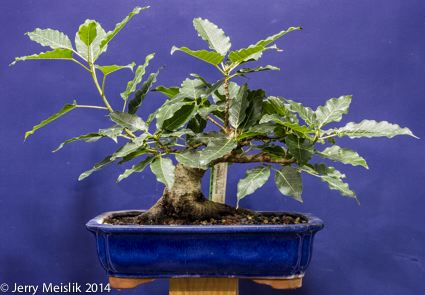
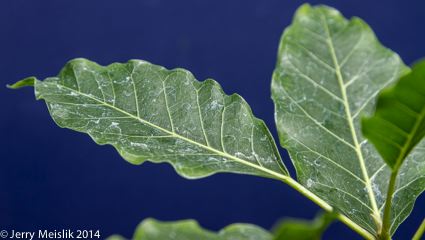
Ficus ingens is a fig found in Africa and it is often growing over rocks and is thus called a “rock-splitter”. The leaves are moderately large with a wavy edge and prominent yellowish veins. Its main attraction are the new leaves which come out varying shades of red. The spring flush is a very attractive growth with the tree covered with red leaves.
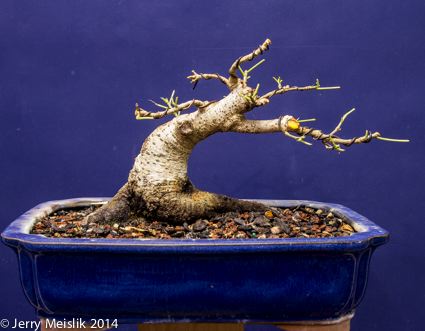
As a bonsai it is not the easiest of subjects as its leaves reduce but not extremely well. Branching is not dense so the growth tends to be rather open.
The red leaf color seems to be accentuated in bright light.
Leaves are large for this small sized bonsaiLeaves are attractive with a wavy edge and prominent main veinsThe bonsai when defoliated shows the beginnings of proper structure for a slant style
Multiple trunks fused together from separate seedlings
Ficus infectoria is an invalid name, according to the botanists, and should technically be called Ficus virens. This material shows a coarser grower than some of my other virens. It seems to be quite happy in container culture with no special needs.
This bonsai is actually 3 or 4 root fused trees that were grown from seed. The seedlings were never separated to their own containers so that over time the root and bases fused to form one tree.
Defoliated once or twice yearly to improve branching, produce smaller leaves and to allow visualization of the branches
As the trees grew they naturally fused to each other so that now this is one root connected tree.
Ficus or figs are in a large family of plants showing many interesting and varied characteristics.
One of the most interesting aspects of various figs is the leaf. Leaves can be large, smooth or hairy, glossy or dull and have many, many other variations.
The photo below shows some fig leaves and their variation. The size of the leaves varies from 7″ to about 1″ on the right. All can be used for bonsai of various sizes depending on how much the leaves can reduce with proper culture and care.
Fig leaves from the left are benghalensis, ingens, religiosa, microcarpa and salicaria