Tag: Ficus natalensis

  • Taper for your bonsai

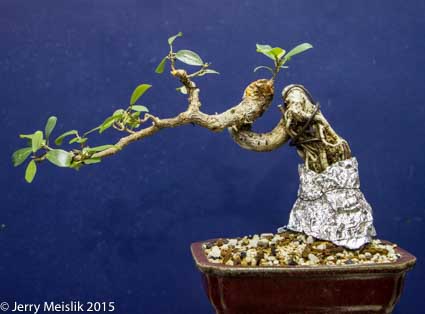
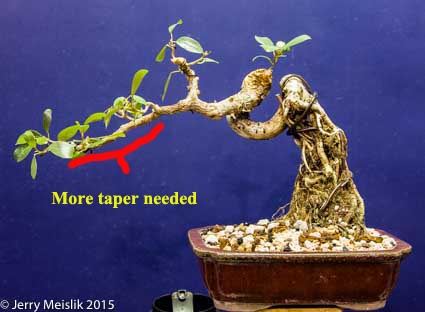
    One aspect that is critical to a bonsai’s design is the proper taper of the trunk and secondarily the branches should mirror the taper as determined by the trunk and the base of the tree.

    Not all bonsai need dramatic taper. Some bonsai are wonderfully designed with a long slim trunk that has little or no taper. Bunjin or literati designs often show little taper and yet they can be spectacular bonsai designs.

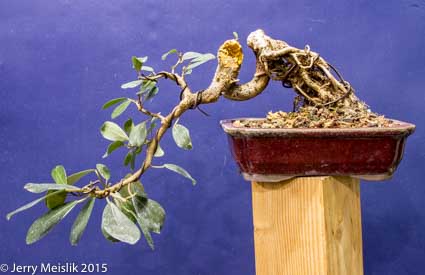
    The most critical factor is the consisency of the pattern in the trunk. Designs that do not seem to work well are ones that mix little taper with lots of taper. Once the taper is set by the lower trunk the rest of the tree’s design should follow.
    _MG_3254
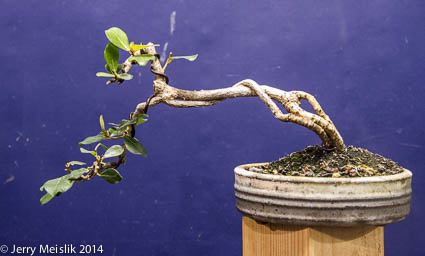
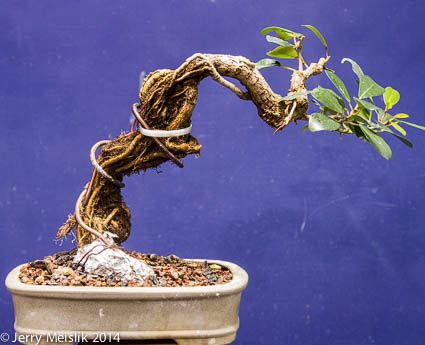
    Semi-cascade exposed root style with an overly long and cascade end that is not tapered
    _MG_5886 copy
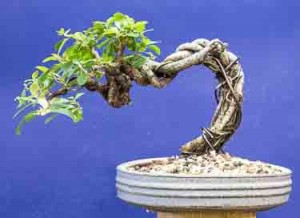
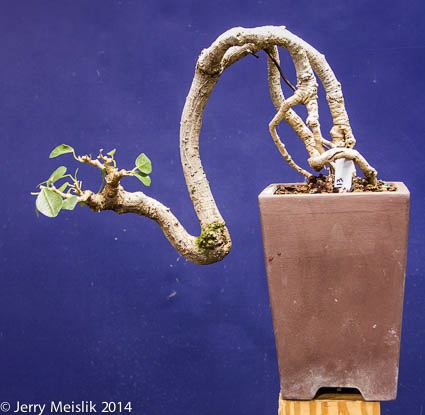
    The terminal has been shortened and the taper is beter but still the taper feels not to be quite enough
    _MG_8013 copy
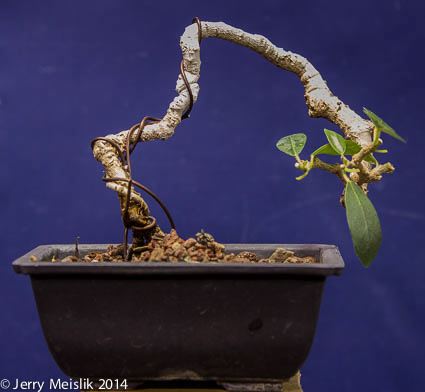
    The terminal has been shortened more. Taper at this point seems a bit too abrupt but lengthening the tip will cure this problem


  • Tilting the bonsai

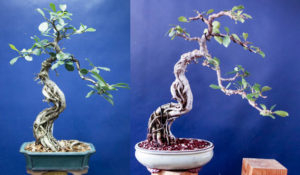
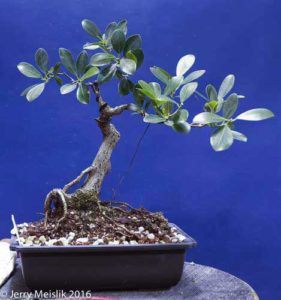
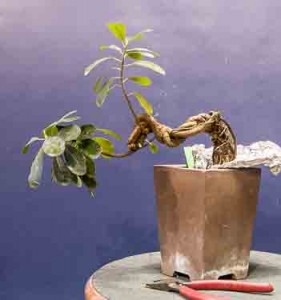
    Sometimes a bonsai creation works well and sometimes a gentle adjustment in one factor can result in a great improvement. In this case a seed grown Ficus natalensis in the exposed root style appears to work quite well. Making a simple adjustment and tilting the tree to the right improves the design immensely. The left or original image shows a pretty much upright tree that is static. Tilting the tree to the right makes the design a bit more unstable but also allows the movement of the trunk to be emphasized.

    Ficus natalensis on left shows good stability while the image on the right is a bit more unstable but seems to help the flow of the trunk
  • Root cuttings

    Root cuttings are one of the easiest ways to develop a good bonsai from throw away materials. Repotting a fig bonsai is needed every year to 5 years depending upon growth, species, size of pot etc.

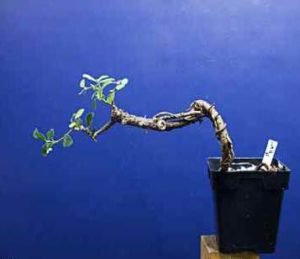
    On removing some of the larger and more shapely roots the root is potted up with the root hairs in the soil and the cut end sticking out of the soil about 1-2 inches. After 2-6 months the end of the root will sprout new leaves and stems. Over time the new growth can be shaped to be an interesting bonsai. In addition most of the root can be lifted out of the pot to make a longer trunk.

    Not all fig species will sprout from roots but natalensis is one that sprouts very easily.

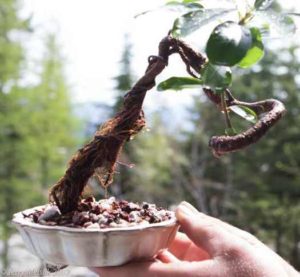
    Ficus natalensis, root cutting that has sprouted new stems and leaves
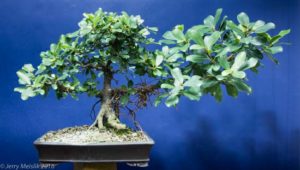
    The same root cutting after a year of growth and wiring for shape
  • Taking a tree apart to improve it

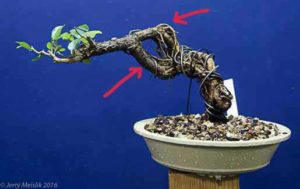
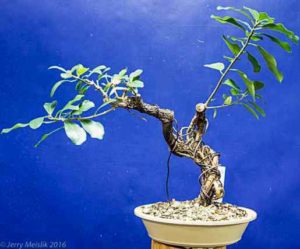
    This is a young rooted cutting of Ficus natalensis but the two roots as indicated did not look right to my eyes. So I split the tree and allowed it to sprout back. I like the two new pieces and with more growth I think each may work out to be a reasonable bonsai tree.

    Ficus natalensis, rooted cutting, with arrows showing the roots that I did not like
    Ficus natalensis, rooted cutting, with arrows showing the roots that I did not like
    cut_23a3316
    The small root on the right sprouted out
    The small root sprout has been potted up and will be allowed to grow to develop an apex
    The small root sprout has been potted up and will be allowed to grow to develop an apex
    The larger piece will need more development but I like it better now
    The larger piece will need more development but I like it better now
  • Slave branches

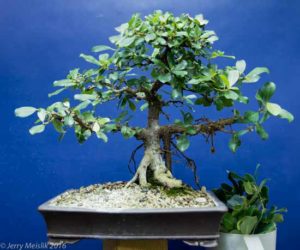
    Slave branches are used to thicken a bonsai trunk or even branch. By allowing wild and untrimmed growth of these branches the trunk or branch can be thickened.

    Once the thickening is done the slave branch can be removed or trimmed back.


    Wild and untrimmed growth to thicken this branch on a Ficus natalensis/thonningii complex bonsai
    Wild and untrimmed growth to thicken this branch on a Ficus natalensis/thonningii complex bonsai
    _23a3746
    The branch has been shortened back once it has the proper thickness but needs secondary and tertiary branches to be developed

    The branch thus thickened, as in this case, now has a proper thickness but will need more work to ramify it and develop secondary and tertiary branches. This can be done with repeated nipping out of buds and defoliation techniques.

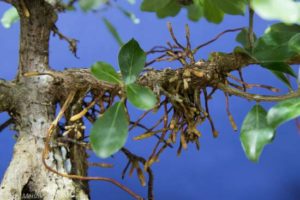
    Aerial roots are kept on this branch as they speed branch thickening
    Aerial roots are kept on this branch as they speed branch thickening
  • How to thicken a branch

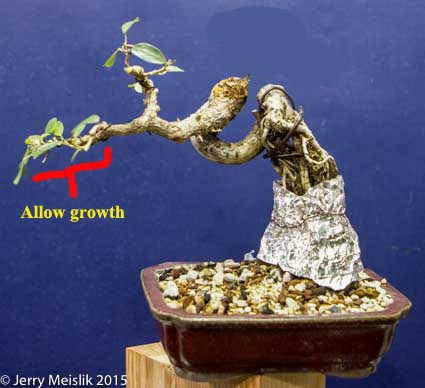
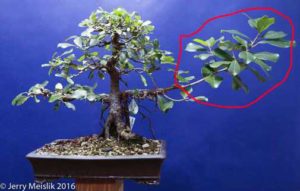
    On this bonsai Ficus natalensis the lowest branch on the right side is not thick enough. Most often the lowest branch should be the thickest on the tree. In order to achieve proper thickness the branch is allowed to grow longer than the style dictates. Note the leaves are also larger than the rest of the tree which is being trimmed regularly.

    In a year or two the branch will thicken because of its continued growth and then it will be appropriately shortened. The next step will be to continue the process of shaping the branch properly.

    The area in red is allowed to grow without trimming to thicken the branch
    The area in red is allowed to grow without trimming to thicken the branch
  • Slave branches

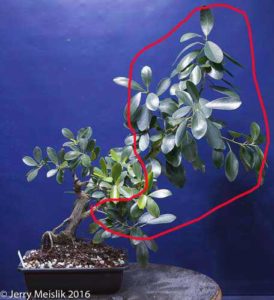
    Slave branches are used to thicken a part of the trunk or branch that needs to be heavier. Slave branches are allowed to grow wildly without trimming and when the thickening has been achieved they are removed.

    This Ficus natalensis has a slim trunk that would be improved by thickening it to introduce some more taper. The branch outlined in red was allowed to grow for a year or two to thicken the trunk.

    slaveon_23A0798
    Slave branch on this Ficus natalensis to thicken the lower trunk of the tree
    _23A0806
    Lower trunk has been thickened sufficiently so the slave branch has been removed


  • Ficus natalensis exposed root style

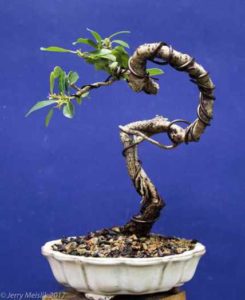
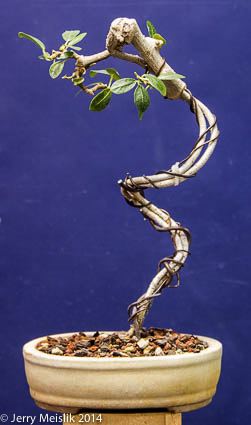
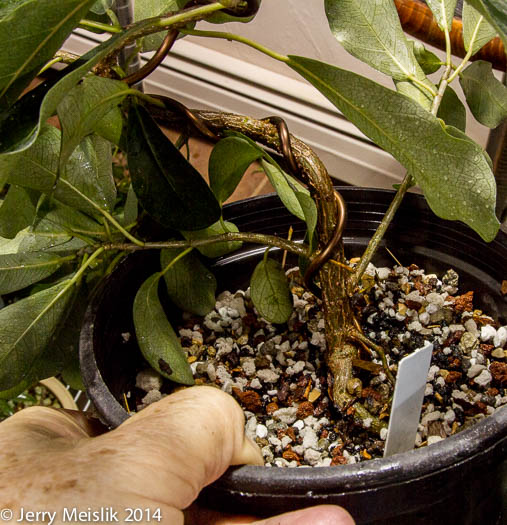
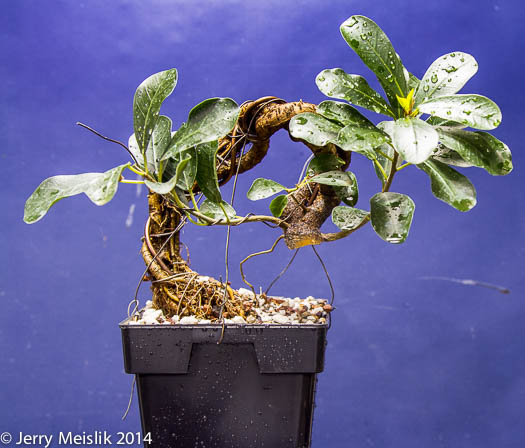
    Ficus natalensis is one of my favorite species for bonsai. It has many characteristics making it suitable for bonsai. One, of these is how easily it is grown from root cuttings.

    The images show one of mine that is only 2 years from a root cutting.

    Root cutting in 2013
    Root cutting in 2013
    Finish-C23A0270
    Same cutting in 2015
  • Exposed root styles

    One of my favorite styles for tropical bonsai is the exposed root style. This may represent trees whose roots have been gradually exposed by a river washing the soil away from the roots or with trees growing on a hillside which is being eroded away. It also could be the end stages of a tree starting life as a strangler or epiphyte and then having the host trunk die and rot away leaving the strangler exposed by itself.

    See how these various figs in this style work for you.


    Ficus natalensis
    Ficus natalensis
    _MG_1355
    Ficus natalensis
    _MG_1365
    Ficus ‘Mystery’
    _MG_1385
    Ficus ‘Mystery’
    _MG_1391
    Ficus ‘Mystery’
    _MG_1403
    Ficus ‘Mystery’


    The definitive reference work on Ficus
    for bonsai. The book is a softcover, 8 by 10 inch volume, with 144 color pages, containing detailed information for the beginner as well as the advanced hobbyist.
     Click here for more information

  • Splitting a fig into two future bonsai trees

    Sometimes splitting a fig into several parts is the way to go with initial styling to maximize the material’s potential.

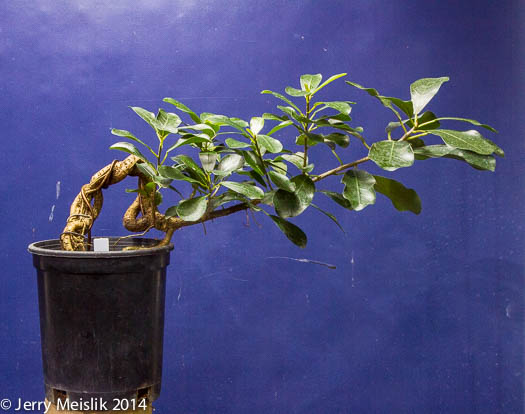
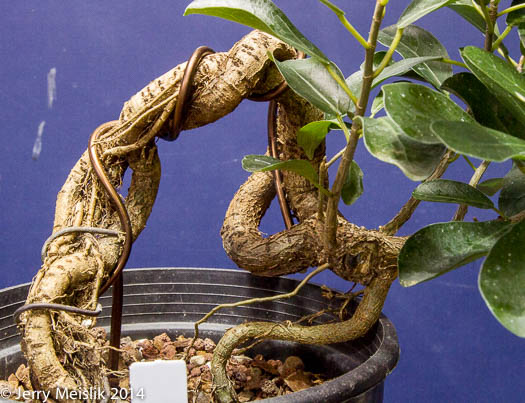
    The pant is a Ficus natalensis grown from a root cutting and perhaps two years old. The only exciting thing about it is the twisting lower trunk which should make a nice tree using that as the focal point for the future bonsai.

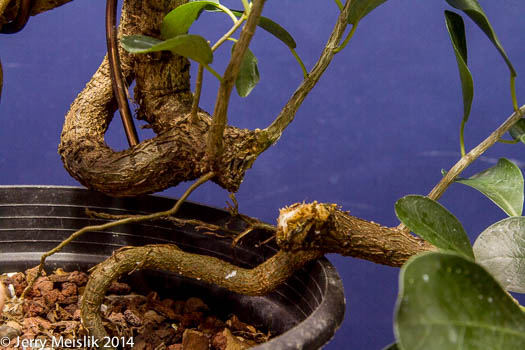
    An appropriate spot was chosen to split the tree into two sections. This point was selected since it would leave the top section with a good aerial root to keep it alive. This section will live happily on this one root until it is time to give it a styling.

    _MG_0533
    The start
    _MG_0536
    Close up of the top section of the plant
    _MG_0541
    The two sections are now split apart leaving the top part with a good root to carry it
    _MG_0551
    The top section planted using its one root
    _MG_0567
    The bottom section potted and several branches remain to form the future of this bonsai

    The final design is not done but this is just the initial blocking out of the future bonsai. Consider breaking up a tree when the parts are more exciting  than the original tree left intact.


    The definitive reference work on Ficus
    for bonsai. The book is a softcover, 8 by 10 inch volume, with 144 color pages, containing detailed information for the beginner as well as the advanced hobbyist.
     Click here for more information